Baribeau Inspires ECU Student-Athletes To “Change The Narrative”
July 26, 2017 | General
By Joe Corley
ECUPirates.com
Believing, as she has said and written many times, that "something is badly broken in today's football culture," Rachel Baribeau in the last two years has taken her message of "Changing the Narrative" to several universities nationwide, including last season's combatants in the national title game, Clemson and Alabama.
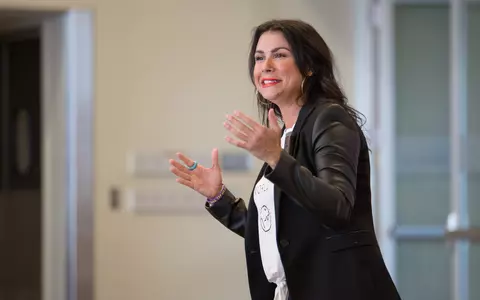
Baribeau, a broadcast journalism graduate of Auburn University who has worked for ESPN, Fox Sports, CBS Sports, Sirius XM College Sports and Yahoo, among others, brought that message to a group of male student-athletes at East Carolina on Tuesday afternoon in Harvey Hall. A survivor of domestic violence herself, Baribeau is attacking a problem that she has said is "breaking my heart."
To that end, her speech had an unmistakable theme of selflessness.
"It's not about you," Baribeau said. "I think that's the No. 1 secret in life. And once you figure out that your purpose is greater than yourself, that ultimately serving others and doing for others is your purpose, it's a beautiful life."
The point was made.
"Our purpose on this earth isn't to play a sport, it's to help other people," said Garrett McGhin, a junior center on the football team. "I think sometimes people get confused and think that sports is their outlet, but really, it's the way you can affect people that's your purpose."
It actually was a return trip to Greenville for Baribeau, who told the story of how on her last visit to ECU as a sideline reporter for a football game a few years ago, she accidentally got a little too aggressive with a Q-tip and enlisted the help of the team doctors before the game to make sure she could hear through her ear piece.
This trip had a far more serious tone. Disheartened by what she saw as a troubling trend in college football, with frequent news stories on sexual assault, rape and other crimes, Baribeau decided to take action. She has been giving these speeches dealing with maturity and personal responsibility for about two years.
She drew from personal experiences. About 50 minutes into the hour-long presentation, she told of her own case of domestic abuse, about how she was dragged by her hair from one end of the house to the other, about how she lost chunks of hair and developed carpet burns that left scars that still are visible. There were six other people in the house, and although Baribeau screamed for help, none came.
"It's hard to talk about, but it's cathartic," she said. "It still hurts that none of those six people came to help, but every time I give one of these talks and I have a young man come up and say, 'I would've protected you,' that goes to heal my heart."
Coach Scottie Montgomery had been trying to arrange a visit for Baribeau for nearly a year, but hadn't been able to connect. When she heard the story this spring about defensive end Kiante Anderson, a former walk-on from Winterville to whom Montgomery awarded a scholarship on Mother's Day by surprising Anderson's mother, Tia Chapman, with the news, Baribeau reached out and the connection was made.
"I really want (the players) to change the narrative," Montgomery said. "Sometimes the negative can outweigh the positive that comes from our kids, and when I say our kids I mean college student-athletes across the country. Sometimes the negative gets published more than the positive. I want our kids to be kings and understand there is a certain way they are to treat not only themselves, but others as they find their purpose."
Baribeau described the process that took her from being someone who grew up with two brothers in a sports-oriented house — yet in college who wanted to be a general assignment newspaper reporter — to the person she is today. She got into TV and radio, and even did five days as a player in training camp for the Columbus (Ga.) Lions indoor professional football team.
As part of a segment on her sports talk radio show, in 2012 she met Kevin Turner, a former Alabama football player who went on to play in the NFL with the New England Patriots and the Philadelphia Eagles. In 2010, Turner had been diagnosed with ALS.
"It had been all about me," Baribeau said, "but life has a funny way of teaching you things."
She sponsored a fundraiser for ALS research, and not long after that she decided to climb Mount Kilimanjaro to raise more funds.
"Kevin Turner taught me a lot," Baribeau said. "In his last years, he didn't need to go to Congress, he didn't need to fight for better helmet safety, but he said, 'It's not about me.' And because of that, he changed so many people's lives. And I'm sitting here today doing this because of that man."
Turner died March 24, 2016.
"I had a teacher in high school who had ALS, so I definitely connected to the Kevin Turner story," McGhin said.
Toward the end of her speech, Baribeau discussed how to treat women better. She talked about the importance of simple gestures such as holding the door or standing when a woman enters a room.
"If you want a queen, you have to be a king," she said.
As she wrapped up, she invited the student-athletes to stop and give her a hug on the way out. There was quite a line.
"There were 20 or 30 of them here, telling me stories," Baribeau said. "That's how I judge whether or not this talk works. If I never had the interaction with the players afterward, I wouldn't continue to do this. What I'm hearing from these players at every school I've been to, including this one, is how it's affecting their lives, how they want to be a king for their mom who's dying of cancer, how they want to be a king for their son, how they want to start an after-school center. All these stories, that keeps me going."
ECUPirates.com
Believing, as she has said and written many times, that "something is badly broken in today's football culture," Rachel Baribeau in the last two years has taken her message of "Changing the Narrative" to several universities nationwide, including last season's combatants in the national title game, Clemson and Alabama.
Baribeau, a broadcast journalism graduate of Auburn University who has worked for ESPN, Fox Sports, CBS Sports, Sirius XM College Sports and Yahoo, among others, brought that message to a group of male student-athletes at East Carolina on Tuesday afternoon in Harvey Hall. A survivor of domestic violence herself, Baribeau is attacking a problem that she has said is "breaking my heart."
To that end, her speech had an unmistakable theme of selflessness.
"It's not about you," Baribeau said. "I think that's the No. 1 secret in life. And once you figure out that your purpose is greater than yourself, that ultimately serving others and doing for others is your purpose, it's a beautiful life."
The point was made.
"Our purpose on this earth isn't to play a sport, it's to help other people," said Garrett McGhin, a junior center on the football team. "I think sometimes people get confused and think that sports is their outlet, but really, it's the way you can affect people that's your purpose."
It actually was a return trip to Greenville for Baribeau, who told the story of how on her last visit to ECU as a sideline reporter for a football game a few years ago, she accidentally got a little too aggressive with a Q-tip and enlisted the help of the team doctors before the game to make sure she could hear through her ear piece.
This trip had a far more serious tone. Disheartened by what she saw as a troubling trend in college football, with frequent news stories on sexual assault, rape and other crimes, Baribeau decided to take action. She has been giving these speeches dealing with maturity and personal responsibility for about two years.
She drew from personal experiences. About 50 minutes into the hour-long presentation, she told of her own case of domestic abuse, about how she was dragged by her hair from one end of the house to the other, about how she lost chunks of hair and developed carpet burns that left scars that still are visible. There were six other people in the house, and although Baribeau screamed for help, none came.
"It's hard to talk about, but it's cathartic," she said. "It still hurts that none of those six people came to help, but every time I give one of these talks and I have a young man come up and say, 'I would've protected you,' that goes to heal my heart."
Coach Scottie Montgomery had been trying to arrange a visit for Baribeau for nearly a year, but hadn't been able to connect. When she heard the story this spring about defensive end Kiante Anderson, a former walk-on from Winterville to whom Montgomery awarded a scholarship on Mother's Day by surprising Anderson's mother, Tia Chapman, with the news, Baribeau reached out and the connection was made.
"I really want (the players) to change the narrative," Montgomery said. "Sometimes the negative can outweigh the positive that comes from our kids, and when I say our kids I mean college student-athletes across the country. Sometimes the negative gets published more than the positive. I want our kids to be kings and understand there is a certain way they are to treat not only themselves, but others as they find their purpose."
Baribeau described the process that took her from being someone who grew up with two brothers in a sports-oriented house — yet in college who wanted to be a general assignment newspaper reporter — to the person she is today. She got into TV and radio, and even did five days as a player in training camp for the Columbus (Ga.) Lions indoor professional football team.
As part of a segment on her sports talk radio show, in 2012 she met Kevin Turner, a former Alabama football player who went on to play in the NFL with the New England Patriots and the Philadelphia Eagles. In 2010, Turner had been diagnosed with ALS.
"It had been all about me," Baribeau said, "but life has a funny way of teaching you things."
She sponsored a fundraiser for ALS research, and not long after that she decided to climb Mount Kilimanjaro to raise more funds.
"Kevin Turner taught me a lot," Baribeau said. "In his last years, he didn't need to go to Congress, he didn't need to fight for better helmet safety, but he said, 'It's not about me.' And because of that, he changed so many people's lives. And I'm sitting here today doing this because of that man."
Turner died March 24, 2016.
"I had a teacher in high school who had ALS, so I definitely connected to the Kevin Turner story," McGhin said.
Toward the end of her speech, Baribeau discussed how to treat women better. She talked about the importance of simple gestures such as holding the door or standing when a woman enters a room.
"If you want a queen, you have to be a king," she said.
As she wrapped up, she invited the student-athletes to stop and give her a hug on the way out. There was quite a line.
"There were 20 or 30 of them here, telling me stories," Baribeau said. "That's how I judge whether or not this talk works. If I never had the interaction with the players afterward, I wouldn't continue to do this. What I'm hearing from these players at every school I've been to, including this one, is how it's affecting their lives, how they want to be a king for their mom who's dying of cancer, how they want to be a king for their son, how they want to start an after-school center. All these stories, that keeps me going."


Monday, September 14
Saturday, September 12
Thursday, September 10
Monday, September 07


